Did you know that the foundational years of a child’s life, encompassing primary and secondary education, lay the groundwork for nearly 85% of their future learning and career success? It’s a staggering statistic, underscoring the profound impact these formative educational stages have on individuals and society at large. Far from being mere stepping stones, primary and secondary education represent a dynamic, evolving ecosystem where curiosity is ignited, potential is nurtured, and the very fabric of future citizens is woven. Let’s delve into this vital arena, moving beyond the simple definitions to explore its intricate workings and undeniable significance.
The Bedrock: Understanding Primary Education’s Core Mission
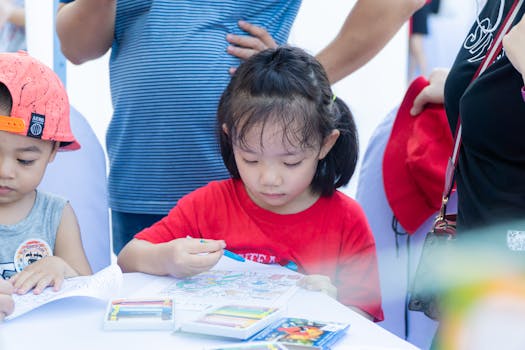
Primary education, often starting around ages 5-7, is where the journey of formal learning truly begins. It’s more than just teaching the alphabet and basic arithmetic; it’s about cultivating a child’s inherent desire to understand the world. Here, educators act as master builders, laying down the fundamental pillars of literacy, numeracy, and social-emotional development. In my experience, the most effective primary classrooms are vibrant spaces where play seamlessly blends with purposeful instruction, allowing children to discover, experiment, and build confidence.
Foundational Literacy & Numeracy: This is the bedrock upon which all future academic endeavors are built. Mastering reading, writing, and basic mathematical concepts equips children with the essential tools for comprehension and problem-solving.
Social & Emotional Growth: Learning to share, empathize, communicate effectively, and manage emotions are just as critical as academic skills. Primary school provides a structured environment for these vital life lessons.
Igniting Curiosity: A good primary education doesn’t just impart knowledge; it sparks a lifelong love of learning. It’s about asking “why” and encouraging children to seek out their own answers.
The Ascending Path: Secondary Education’s Expanding Horizons
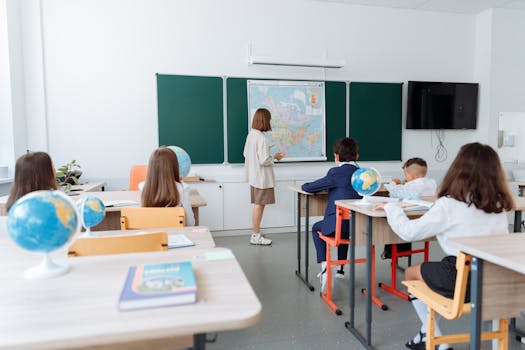
As students transition into secondary education (typically ages 11-18), the landscape of learning broadens considerably. This phase is characterized by increasing specialization, the development of critical thinking skills, and the preparation for diverse post-secondary pathways, whether that’s higher education, vocational training, or entering the workforce. It’s a period of significant personal growth and identity formation, where students begin to explore their passions and potential career interests.
#### Broadening Perspectives: The Curriculum’s Evolution
The curriculum in secondary education expands to cover a wider array of subjects. From the sciences and mathematics to humanities and the arts, students are exposed to a richer tapestry of knowledge. This breadth allows them to discover areas of strength and interest they might not have previously known existed. It’s fascinating to observe how a student’s engagement can shift dramatically when they find a subject that truly resonates with them.
Subject Specialization: Deeper dives into subjects like biology, chemistry, physics, literature, history, and foreign languages foster in-depth understanding.
Developing Abstract Thinking: Secondary education challenges students to think more abstractly, analyze complex problems, and form reasoned arguments.
Career Exploration: Introduction to vocational subjects, internships, and career counseling helps students begin to envision their future professional lives.
#### Navigating the Transition: From School to What’s Next
A significant role of secondary education is preparing students for the next stage of their lives. This involves not only academic preparation for college entrance exams or vocational certifications but also equipping them with essential life skills. Think about the increasing complexity of societal issues; secondary schools have a responsibility to help students develop the discernment and critical thinking needed to navigate them.
Post-Secondary Readiness: This includes preparation for standardized tests, college application processes, and understanding different higher education or training options.
Life Skills Development: Essential competencies like financial literacy, civic engagement, and effective communication become increasingly important.
Personal Development: Secondary school is a critical time for self-discovery, developing independence, and learning to manage responsibilities.
The Dynamic Duo: Why Primary and Secondary Education Are Intertwined
It’s impossible to discuss primary and secondary education in isolation. They form a continuum, each building upon the foundations laid by the previous stage. A strong primary education ensures students are well-prepared for the rigors of secondary school, preventing foundational gaps that can hinder progress. Conversely, an effective secondary education can reinforce and deepen the skills and curiosity sparked in primary years.
Building Blocks of Success: The literacy and numeracy skills mastered in primary school are the essential building blocks for all subjects encountered in secondary education. Without them, students struggle to access more complex material.
Continuity in Learning: A seamless transition between these stages ensures that learning remains progressive and engaging, rather than a series of disconnected experiences.
Holistic Development: Both phases are committed to the holistic development of the child, fostering not just academic prowess but also character, resilience, and social awareness. It’s a journey, not a destination, and the handoff between these crucial phases is vital for sustained growth.
Beyond the Classroom: Fostering Essential Skills for the 21st Century
In today’s rapidly evolving world, the definition of a well-rounded education extends beyond textbooks and exams. Primary and secondary education systems are increasingly tasked with cultivating skills that are essential for navigating the complexities of the 21st century. This involves fostering adaptability, creativity, and collaboration.
Digital Literacy: With technology permeating every aspect of life, understanding and effectively using digital tools is paramount.
Problem-Solving & Critical Thinking: Equipping students to analyze information, identify problems, and devise innovative solutions.
Collaboration & Communication: The ability to work effectively in teams and articulate ideas clearly is a cornerstone of modern success.
Creativity & Innovation: Encouraging students to think outside the box and approach challenges with original ideas.
## The Enduring Impact: Shaping Futures Through Education
Primary and secondary education are not just phases of a child’s life; they are investments in the future. The quality of these educational experiences directly influences individual potential, societal progress, and the collective ability to tackle global challenges. From the initial spark of wonder in a primary classroom to the honed analytical skills developed in secondary settings, the journey is transformative.
What can we do, as parents, educators, and community members, to ensure that every child receives the robust, inspiring primary and secondary education they deserve, setting them on a path to a fulfilling and impactful life?